For years, ROI has been the gold standard for measuring client success. It’s clean, quantifiable, and gives everyone a clear sense of whether an investment paid off. But the reality is, ROI alone no longer tells the full story of value. This is especially true in today’s environment. Partnerships are more complex. Outcomes take longer to materialize. Success depends as much on collaboration as on numbers.
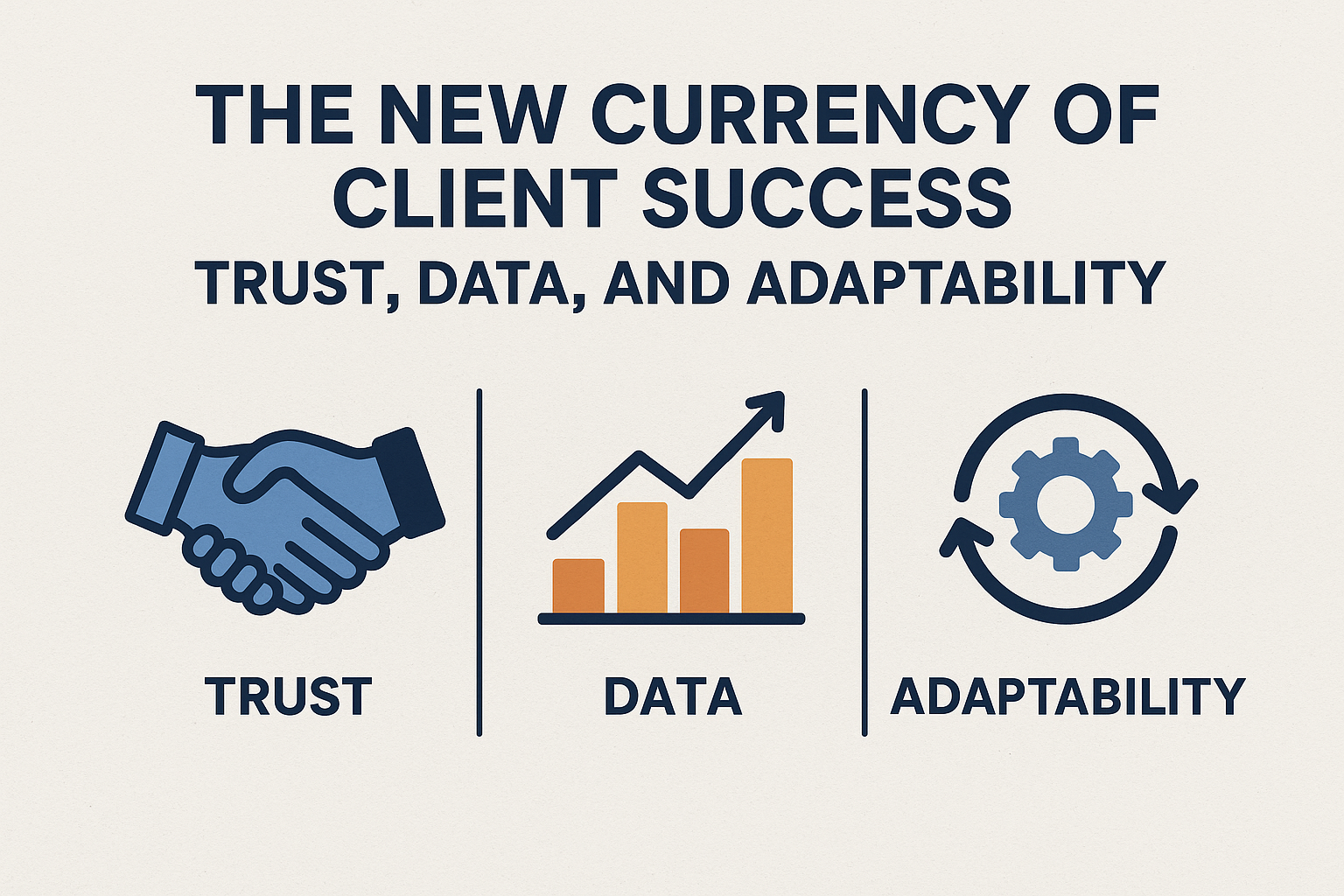
True client value goes beyond financial return. It lives in the trust built between teams. It is found in the alignment of business goals. The impact is created through innovation and a shared vision. These are the metrics that define long-term partnerships, the ones that turn clients into advocates and vendors into strategic allies.
The Limits of ROI
ROI tells you what happened; it doesn’t tell you why or what’s next.
It’s a lagging indicator, useful, but often disconnected from the day-to-day signals that predict renewal, expansion, or attrition. In client services and customer success, we often fall into the trap of defending ROI. We fail to tell the larger story behind it.
A client might see positive financial results. They may still question the partnership if they don’t feel supported, heard, or aligned strategically. Conversely, a client may not yet see measurable ROI. They may still be deeply invested because of the trust and momentum being built.
That’s why the most effective client leaders focus on balancing ROI with other metrics. These include relational, operational, and strategic metrics that better reflect the partnership’s health and trajectory.
Four Dimensions of Client Value
1. Relationship Health
Trust is at the foundation of every successful partnership. Although it’s hard to quantify, the absence of it is easy to feel. Forward-thinking organizations measure relationship health through:
- Executive engagement: Frequency and quality of interactions at the senior level.
- Client advocacy: Willingness to provide testimonials, speak at conferences, or reference for other prospects.
- Perceived partnership strength: Regular pulse surveys that assess if clients view your team as a vendor, partner, or strategic advisor.
When relationship health is strong, clients are more open to new ideas. They are more forgiving of setbacks. They are also more likely to expand the partnership.
2. Operational Performance
Beyond relationship sentiment, clients want reliability and results. This is where metrics like:
- On-time delivery rates
- Issue resolution time
- Compliance or accuracy scores
- Adoption and utilization rates
…build confidence that you can execute consistently. These metrics often make or break client trust at the operational level. When paired with transparency, they become the foundation for future innovation discussions.
3. Strategic Alignment
This is where elite client partnerships differentiate themselves. Strategic alignment measures whether your work actually advances the client’s key business objectives. It’s less about campaign metrics and more about business impact:
- How are we helping the client acquire, retain, or deepen their own customer relationships?
- Are we influencing their top-line or bottom-line goals?
- Have we aligned our roadmap to their future state?
One of the most powerful things you can do is to mirror the client’s own KPIs. If they measure “member engagement,” build a metric that shows how your work drives it. If they report “digital adoption” to their board, connect your initiatives directly to those numbers.
This reframes the conversation from “our success” to “shared success.”
4. Innovation & Growth Readiness
The final dimension looks beyond today’s performance toward what’s possible tomorrow.
Ask:
- Are we co-creating new solutions or testing new ideas together?
- Are we helping them evolve their tech stack or marketing maturity?
- Do we proactively bring insights and innovation opportunities before they ask for them?
Tracking innovation readiness, like the number of pilots, proof-of-concepts, or new capabilities introduced, signals partnership health. It shows that your relationship isn’t static; it’s evolving.
Clients notice when you invest in their future, not just their present.
Building a Value Framework That Resonates
The key is not to measure everything, it’s to measure what matters most to each client. That involves creating a custom value framework for your top accounts. This framework combines quantitative and qualitative indicators across these four dimensions.
A strong framework:
- Defines what “success” looks like together.
- Establishes clear measures for both performance and partnership.
- Uses dashboards or scorecards to visualize progress.
- Is reviewed regularly during business reviews, not just at renewal time.
When done well, this framework turns data into dialogue. It shifts executive reviews from defensive (“here’s what we did”) to collaborative (“here’s how we’re progressing toward your goals”).
Telling the Story Behind the Metrics
The data is only as powerful as the story you tell with it. Senior leaders and executives don’t just want metrics, they want meaning.
So instead of reporting numbers in isolation, frame them in context:
“Your engagement rates rose 25% because we personalized communications by segment, aligning with your digital adoption goal.”
“We resolved 95% of support tickets within SLA, which stabilized your customer satisfaction and reduced call center volume.”
Every metric should ladder back to a business outcome or client goal. That’s what transforms data from reporting to storytelling, and from vendor status to trusted partner status.
The New Definition of Client Value
ROI will always matter, but it’s no longer the sole indicator of success. Today’s most strategic client leaders understand that value is multifaceted. It’s about outcomes, relationships, and vision, all moving in sync.
When you measure and communicate across these four dimensions, you do more than prove your value. You focus on relationship health, operational excellence, strategic alignment, and innovation readiness. You show that you’re indispensable.
Because the clients who stay, grow, and advocate aren’t the ones who simply see results. They’re the ones who feel partnership.