If you work in digital marketing, advertising, or growth, you already live in metrics.
- Impressions.
- Clicks.
- CTR.
- Frequency.
- Viewability.
- Conversion.
These numbers are not the problem. The problem is how we use them. Too often, organizations treat metrics as final answers instead of starting points. A campaign launches, numbers roll in, a dashboard lights up, and decisions get made quickly:
- “It worked.”
- “It failed.”
- “Kill it.”
- “Scale it.”
- “Tweak it.”
But metrics rarely tell the full story by themselves. In reality, they give us the what, not the why. And that gap between outcome and understanding is where most ad budget gets wasted.
Impressions and Clicks Aren’t the Villains
There’s a popular narrative right now that “metrics are broken” or that “clicks don’t matter anymore.” That’s lazy thinking. Metrics are not the enemy, they are the footprint.
They tell you:
- Something happened
- Someone did (or didn’t) act
- An experience produced a behavioral result
What they don’t tell you is:
- What happened before the click
- Why some impressions worked and others didn’t
- What the user saw, ignored, or misunderstood
- Where friction occurred
- What distracted the audience
- What turned them away
Metrics are the shadow of the experience, not the experience itself. Trying to optimize purely on outcome data is like coaching a team by only reading the final score. It is like never watching a single play.
You see the result. But you miss the reason.
Why Dashboards Create Overconfidence
One of the biggest risks of modern analytics is false certainty. Dashboards look clean. Charts look precise. Numbers look absolute. But most performance metrics are probabilistic by nature.
They tell you:
- Pattern trends
- Correlations
- Surface outcomes
They rarely tell you:
- Causation
- Experience breakdown
- Behavioral nuance
This creates a dangerous leadership mindset: “If the number is up, everything must be working.” Sometimes that’s true. Sometimes it’s the calm before churn, erosion, or diminishing returns.
Businesses sometimes focus too much on performance readouts. They fail to understand experience mechanics. Then, they scale what they don’t fully understand. Later, they act surprised when efficiency fades.
The Missing Layer: Experience Intelligence
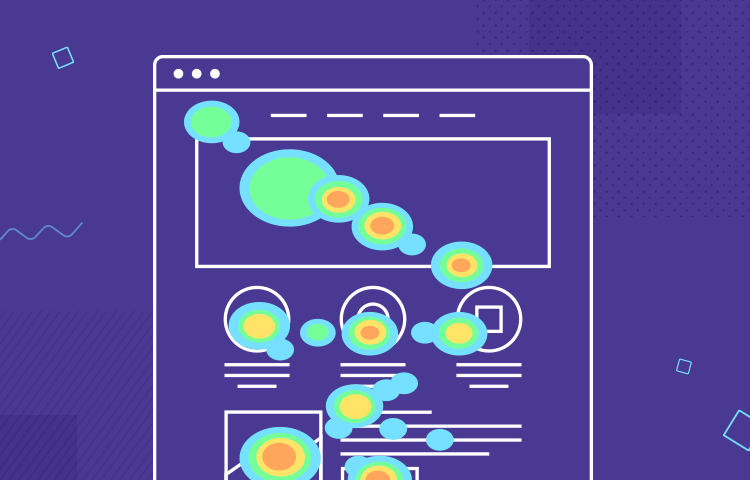
There is a layer between impression and outcome that most teams never see: The experience itself.
Not the wireframes.
Not the design intent.
Not what was “supposed to happen.”
What actually occurred for the human on the other side.
Experience intelligence asks:
- Did the user notice the message?
- Did they see the offer or scan past it?
- What drew the eye?
- What created friction?
- What triggered abandonment?
- What confused?
- What resonated?
Without this layer, optimization looks like:
“We’ll test the headline.”
“Let’s change the color.”
“Shift layout.”
“Increase frequency.”
Which is better than doing nothing, but still largely guesswork. That’s not strategy. That’s experimentation without insight.
Why Performance Problems Are Often Perception Problems
When campaigns underperform, leaders often assume:
- The offer is wrong
- The creative missed
- The targeting was off
- The audience doesn’t care
- The channel is broken
Sometimes that’s true, but just as often: The user never saw what mattered. Not because the ad didn’t load.
Not because tracking failed. Because attention is selective and perception is ruthless.
If your message doesn’t stand out cognitively, it competes unsuccessfully with:
- The feed
- The motion
- The noise
- The context
- Emotional state
- Device behavior
- Competing content
So you end up solving the wrong problem. You rewrite instead of redesigning experience. You retarget instead of reducing friction. You scale instead of clarifying.
The Strategic Shift Leaders Are Making
The smartest teams are no longer arguing about:
- Which number is “right”
- Which dashboard to trust
- Which model wins
They’re asking: “What is actually happening in the experience between impression and outcome?” That question changes everything.
It builds alignment between:
- Marketing
- Data
- Creative
- Product
- UX
- Revenue
Because now you are:
- Diagnosing instead of guessing
- Designing instead of reacting
- Predicting instead of explaining in hindsight
This is where performance stops being reactive and becomes engineered.
Growth Happens Inside the Experience
Performance isn’t magic. It’s mechanics. Clicks don’t appear because of probability. They happen because the experience invites them.
Conversions don’t increase through hope. They happen when:
- Value is obvious
- Friction is reduced
- Attention is earned
- Trust is built
When you understand the experience layer, you gain control over levers that most companies don’t even know exist. And efficiency follows clarity.
The Real Question Is Not “How Did It Perform?”
It’s “How did people experience it?”. Because performance metrics measure outcome after exposure. Experience intelligence explains why the outcome happened in the first place.
If your number goes down:
- Was it creative?
- Was it cognitive overload?
- Was it distractions?
- Was it placement?
- Was it visual competition?
- Was it trust erosion?
Without understanding the experience, you guess. With it, you optimize with confidence.
Final Thought
Impressions and clicks aren’t outdated. But they are incomplete by themselves. The future of growth does not belong to the teams with the most data. It belongs to the teams with the clearest understanding of human experience behind the data. If you only measure outcomes, you’re reactive. If you understand experience, you’re in control. And control is where real growth lives.